


By Victoria Costello,
Like anyone with a screen, I’ve been enraged and debilitated by the daily onslaught of Epstein-related horrors filling our newsfeeds. Add to it, my shame at realizing I’ve lived six decades unaware of the cabal of rich and powerful men, the same billionaires who run every major institution on which we depend, operating an international human trafficking syndicate to facilitate their crimes.
Triggered, anyone?
As a published author and writing teacher of trauma-centered memoir and autofiction, I have another, more immediate stake in this bizarre cultural moment. Since last December, I’ve been meeting weekly with eighteen, mostly female adult writers who are working on stories that reveal pretty much the worst things that have ever happened to them, including several cases of childhood sexual assault. My purpose with the class is to provide a safe space for these writers. First, to identify their traumatic memories. Then help them translate those experiences into a compelling story with a beginning, middle and end. This is storytelling as a path to healing — for the benefit of the writers themselves and, ultimately, their readers.
As the Epstein horrors have metastasized into a near constant sound bath, I’ve watched several of my students — who range in age from their low thirties to high seventies and represent both aspiring and veteran authors — be massively triggered by what they’re hearing. How could they not be? Some of their experiences come close to crimes contained in the Epstein files: namely, years of sexual assaults committed by adults who’ve never faced accountability.
One result of this surreal juxtaposition is that our class discussions, which previously would focus on tried-and-true topics like character and plot, or literary conventions associated with memoir versus a novel or the hybrid genre known as autofiction, have changed and expanded. Suddenly, topics such as statutes of limitations on childhood sex abuse, and the legal standards required to convict a perpetrator in a court of law, have entered these conversations.
For those writers who are fictionalizing key aspects of their life stories, these discussions have catalyzed some important questions. What if I had told my grandma/teacher/neighbor what was happening to me, and they had helped me get free of my abuser?
As the latest narrative medicine research has shown, the process of asking such what if questions, and changing the story of what happened to you in the realm of fiction can empower you in real life. Not to deny factual truth. But to accept it and allow oneself to take a step back if only to change the way you understand what happened to you. For example, to shift your identity from that of a victim to a survivor.
So, I’ve made room for these discussions just as I’ve encouraged my students to express their feelings about the latest Epstein revelations as they feel the need. Frankly, it’s been tough going. One young writer confessed, in tears, to the group that her “previously conquered” fear of ridicule and censure had returned in force, leading her to decide against finishing or sharing her story. Vulnerability, always a big part of this process, has been put on overdrive.
But I’m also sensing some positive effects coming from what I perceive as the formation of a new permission structure in our public discourse, one that allows for more open and honest discussions of these intimate, once taboo subjects. Along with greater understanding of basic trauma recovery questions, like Why did you wait so long to tell anyone? It’s a shift that ultimately will help survivors shed the shame so often attached to such testimonies, whether at the kitchen table or in a court of law — especially those involving bodily violations.
As any creative writing teacher, psychotherapist or social worker will tell you, violence against children takes many forms. The most common category I see in my students’ stories is emotional and physical abuse by parents and other authority figures. And yet, there are innumerable variations.
One sixty-something writer in my current class is telling the story of growing up under the violent authoritarian control, first of her minister father, then a husband, in a fundamentalist Christian sect. Another is recounting the aftermath of a school shooting, with a dual focus on her own PTSD as a student survivor, and the impacts she has witnessed on her community over two decades.
What’s new in these survivor stories?
Given the unavoidable truth that every human life involves suffering, trauma is by no means a new dimension in anyone’s life story. What’s different today is our understanding of its potentially devastating, long-term impacts. We now know that trauma can be both ancestral and collective, a result of large scale physical and emotional violence wrought by poverty, war, slavery and racism, genocide and forced immigration.
One current student is writing from the perspective of a third-generation Pakistani refugee who is writing to come to terms with the lasting effects of the displacement and rootlessness her family experienced as a result of the 1949 India-Pakistan partition. Another connected her struggle to decide whether to have children to a history of child abandonment in her maternal lineage, a pattern created by losses suffered in the Armenian Genocide of 1915.
Through the science of epigenetics, researchers can now pinpoint the cellular mechanisms involved in the intergenerational transfer of these inherited wounds, along with their physical and behavioral manifestations on individuals. The good news is that as somatic psychotherapy and other healing modalities evolve, including expressive writing, we’re also seeing evidence of their healing.
In one 2012 study of forty-seven depressed out-patients who were given daily writing exercises, researchers charted depressive symptoms and correlated their alleviation with the amount of agency patients gave themselves as the protagonists of their personal stories. Remarkably, after evaluating 600 patient narratives, they noted how certain measurable mental health improvements showed up on the page before their authors exhibited those positive behaviors in their actual lives. According to lead researcher Jonathan Adler, PhD, “It’s like they told a new story and then lived their way into it.”
When I allow myself to continue on this trajectory beyond law, politics, and science, a not insignificant part of me sees the Epstein Files as the catalyst for a necessary spiritual showdown between the forces of good and evil. One portending an imminent choice for humanity between an evolutionary upgrade versus slipping into another, eternal dark age. Only time will tell on the global scale.
As individuals, we don’t need to wait. By which I mean, we can each make positive change happen. How? When we find ourselves in conversation with someone who dares to speak their truth about a traumatic life experience, we can openly believe and support them. But why stop there? Part of the larger shift that I sense happening in response to the courage shown by Epstein survivors and the conversations they’ve catalyzed is the growing realization that there are benefits to be gained for each of us — and for our greater community — when we release the individual traumas we carry.
Here I’m not only talking about the most dramatic forms of childhood abuse or neglect. Your baggage could amount to learned behaviors that led you to discount your own emotional needs. To live your life and form relationships based on false beliefs like I don’t deserve love or I’m not good enough. One good way to start the healing process is to make a conscious effort to remember what happened to you. The next step is to discern what defensive behaviors you’ve developed to compensate for that hurtful experience. At that point, you’re ready to release what no longer serves you through whatever means or methods you’re comfortable with. Expressive writing is one such path.
Meanwhile in book world
Defending trauma-centered storytelling against hostile critics is nothing new for me and other authors and writing teachers who specialize in the literary genres most commonly associated with it, namely memoir and autofiction. The dismissive labels of Misery Lit and Trauma Porn, and accusations of false memories and profit-motivated exaggerations have been around since the early 2000s, when A Child Called It exposed the then taboo subject of child abuse and became a national bestseller.
The same criticisms have been fueled by the more recent headline grabbing ‘expose’ associated with the memoir The Salt Path. And while some criticisms of these and other works may be well-founded, my beef is with the across-the-board negative branding of trauma-centered narratives, which suggests the presence of the same misogyny shown toward female dominated literary subgenres like Women’s Fiction, chick lit and romance, is again at work.
And yet, the popularity of trauma-centered literature appears immune to multiple ‘controversies’ literary and other critics continue to attach to them. Arguments about how we should classify works in which the author overtly, or covertly, tells a personal story, with or without fictional elements. Is it a memoir or novel? Most publishers take the easy way out and choose the latter, even for books that would more accurately be labeled works of autofiction.
I have argued elsewhere that by acknowledging when true-life accounts contain elements of fiction we can help both authors and readers work with nuances and write better stories. Frankly, it appears that consumers of these stories depicting real people overcoming life’s hard knocks simply aren’t pay attention to such critical debates. Neither do they seem bothered about the sheer quantity of trauma narratives flooding both traditional publishing and the chaotic, self-published marketplace. In that sense, publishers are off the hook, leaving any such discussions in the hinterlands of academia — and in the classrooms of trauma-informed writing teachers like me.
So what does any of this have to do with where we find ourselves in the age of Epstein?
As writers, readers, publishers, and book reviewers, we can apply this same sensitivity and awareness to the authors who step forward and share their trauma-centered stories. By definition, those who tell their stories in a form available to all of us are doing the heavy lifting. By speaking their truths, and shifting their perspectives from victim to survivor, they show us that healing is possible.
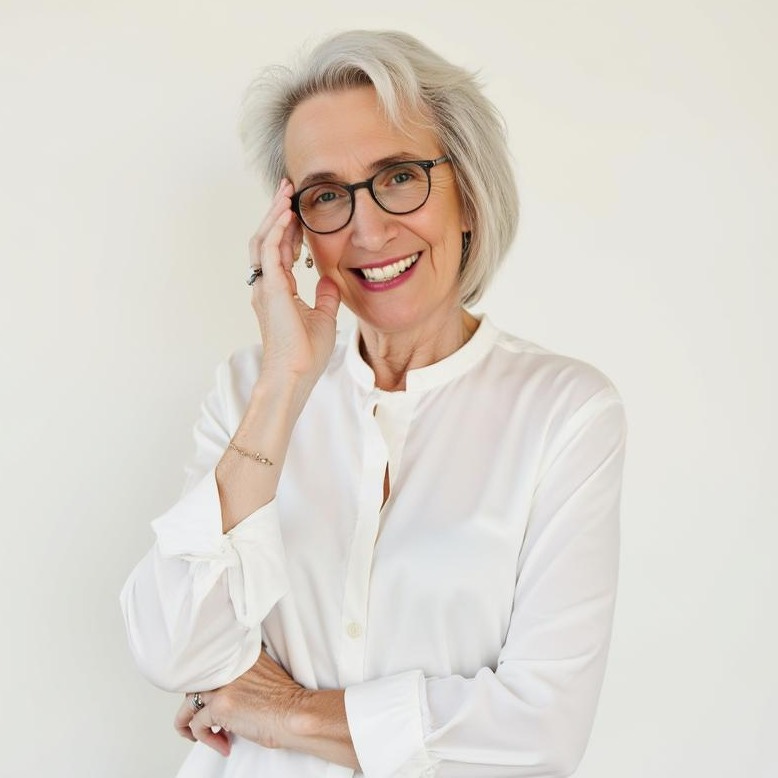
Victoria Costello is an Emmy Award winning documentary filmmaker, a science journalist, an author of memoir and fiction and a writing teacher.
Very well written and a necessary message. Thank you for sharing.
Thank you for this article. Your appreciation of the value of memoir as a tool for personal insight and growth is wonderful.